
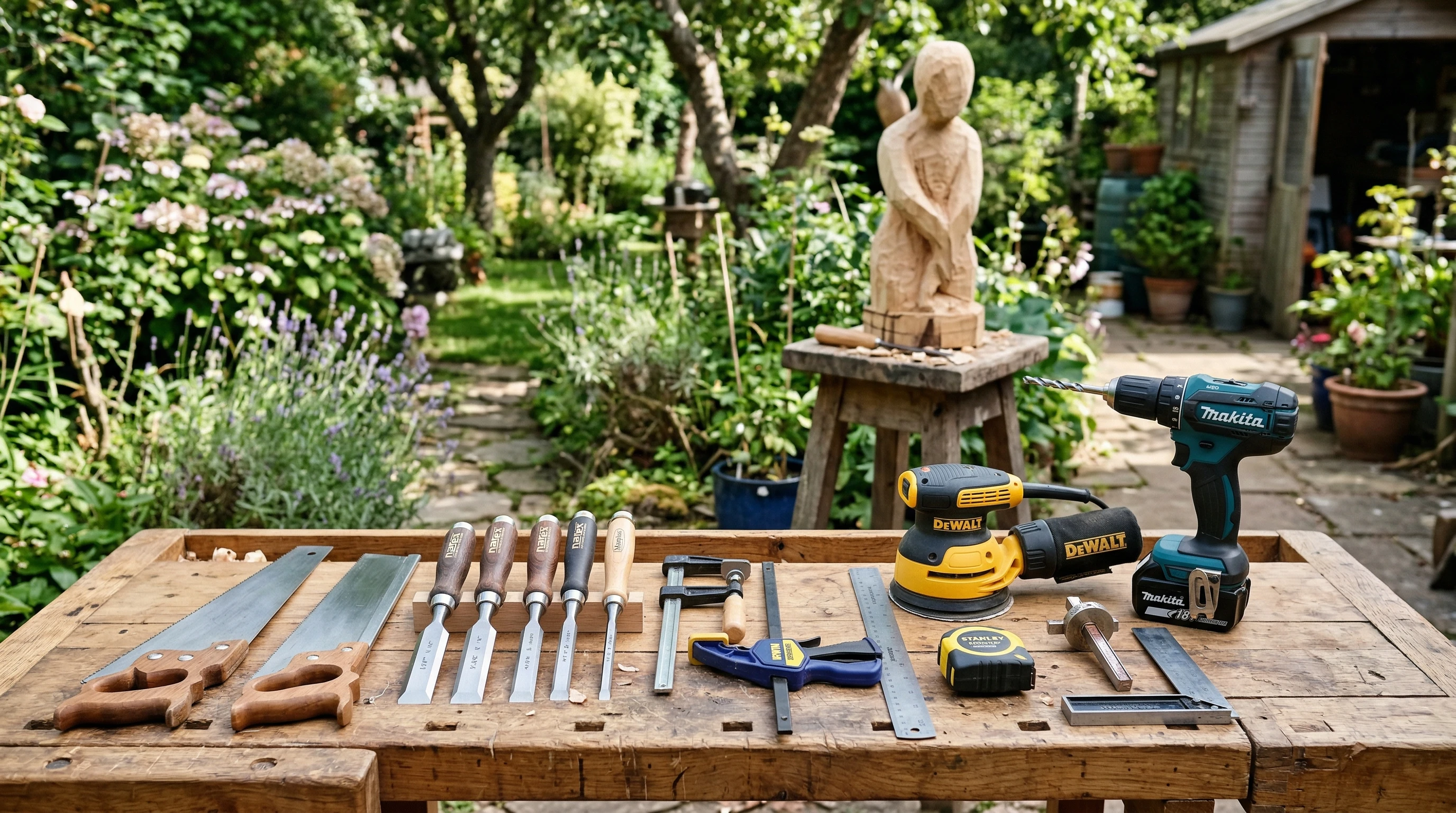
 Crafting wooden art for the garden takes patience, vision, and having the right equipment. Over the years, I’ve realized that quality tools can take a backyard sculpture or a fairytale bench from good to truly eye-catching. If you’re getting into wood garden art for the first time, or you want to take your craft up a notch, some items really belong in every workshop.
Starting with a handful of basics is fine, but as your ideas grow, a solid set of tools will let you focus more on creativity and less on fighting tricky gear. I put together this list to help both new and experienced wood garden artists build a collection that can handle just about any outdoor project you dream up.
Here’s a look at the most useful tools for making wooden garden art, with some handy tips and my own reasons for why each one should have a spot in your shed or studio.
1. High Quality Handsaw: Your Go-To Cutting Tool
Whether I’m shaping a rustic trellis or carving a whimsical birdhouse, a sharp, reliable handsaw is where almost every project begins. Electric saws are great, but a basic handsaw gives you full control over your cut and lets you work anywhere, no cords or outlets needed.
Choosing the Right Saw:
- Go for a saw with comfortable grip; the handle makes a big difference for long afternoons.
- Pick one with crosscut teeth to get smooth, clean cuts on both softwoods and hardwoods.
- Keep your blade sharp for both safety and ease.
I always keep two: a smaller saw for precise work, and a bigger model for rough cutting boards and logs.
2. Chisels and Gouges: Precision for Detail Work
Adding carved details gives garden art a unique personality. I use chisels and gouges for everything from adding texture to petals on wooden flowers to outlining intricate patterns on a bench. They’re super useful if you want your pieces to stand out.
Best Practices:
- Begin with a set that offers different sizes and shapes.
- Keep blades sharp with a honing stone—dull tools can slip and cause accidents.
- Always carve with the grain to avoid splitting the wood.
Once you get used to them, chisels are hard to put down! Try mixing in different sizes to add both bold and subtle details.
3. Cordless Drill and Bits: Speed and Versatility
From building planter boxes to mounting decorative accents, I use my cordless drill constantly. Not only does it take care of pilot holes and screws, but it also speeds up just about every assembly project.
Why It’s Worth the Investment:
- Look for a drill with a long-lasting battery and several speed settings.
- Pick a drill bit set that covers all the standard wood sizes, including a few spade bits for larger holes.
- Attach a screwdriver bit to assemble projects quickly.
This handy gadget saves lots of time and really shines in hard to reach corners of garden arbors or big sculptures.
4. Orbital Sander: Smoothing Made Simple
Wood straight from the lumberyard is rarely as smooth as you want it to be, especially if kids or pets will be around your art. An orbital sander makes quick work of rough surfaces and edges, saving you endless hand sanding.
My Tips:
- Have both coarse and fine grit sandpaper ready; coarse for rough shaping, fine for a silky finish.
- Wear a dust mask to keep things safe and comfortable, especially when sanding outside.
- Always sand in line with the grain for the best results.
Smooth wood not only looks better, it also holds paint and sealant much more evenly. A good sanding job preps your piece for long-lasting beauty.
5. Clamps: The Set of Extra Hands You Didn’t Know You Needed
Trying to glue or screw pieces together while keeping them steady can be tricky without clamps. I use at least a few every time I build, especially when working alone. They hold parts perfectly in place and help glue set properly.
How I Use Clamps:
- Bar clamps and quickgrip clamps cover most garden projects.
- Use several clamps to put even pressure across a long joint, like a bench slat or a garden sign.
- Pick up a selection of sizes so you’re ready for any job, large or small.
They may not seem nextlevel cool, but clamps are essential for any woodworker, preventing frustration and wasted effort.
6. Measuring and Marking Tools: Accuracy Equals Quality
Getting accurate measurements means your projects fit together the way you imagine them. I rely on a quality tape measure, a combination square for precise corners, and a carpenter’s pencil for sketching out ideas on the wood.
- Choose a tape that’s long enough for your biggest garden endeavors and that locks down easily.
- Combination squares help with both right angles and 45degree corners.
- Pencils with thick, dark lead show up on every wood type—worth keeping a few spares in your apron.
Accurate measurements help avoid wasted materials and headaches, so don’t skip this step. Doublechecking now saves you more later.
7. Outdoor Wood Finish: Protecting Your Art
To keep your art looking its best outside, a tough finish will stand up to rain, sun, and wind. I always go for a weatherresistant sealant or paint designed for outdoor wood.
Here’s What I Look For:
- UV and water protection; search for labels like “marine grade” or “outdoor safe.”
- Clear sealants really step up the wood grain, while bright paints can add a pop of color.
- Put it on with a sturdy brush and give it plenty of drying time between coats.
Don’t forget to do a quick touch up each season—wellmaintained art sticks around much longer.
8. Carving Knife: Detail for Small Projects
When it comes to minisculptures, bird figures, or detailed engraving, a quality carving knife gives lots of control without feeling bulky. It’s great for curvy lines, whittling, and adding special touches.
- Choose a knife with an ergonomic nonslip handle.
- Always have a sharpening tool handy—a razor edge matters both for work quality and safety.
This little tool comes with me to the backyard for onthefly touchups and finishing details.
9. Safety Gear: Don’t Work Without It
Protecting yourself is just as important as any tool you use. I always keep safety goggles and work gloves right next to my workspace. Dust masks or respirators are smart for sanding or when using treated wood, and solid ear protection is a must with power tools.
- Go for gear rated specifically for woodworking, not just general home improvement.
- Make switching into safety gear automatic before you begin; your eyes, ears, and hands will appreciate it.
Staying safe keeps working with wood enjoyable and low stress for the long haul.
10. Outdoor Storage for Your Tools: Keep Everything Handy
Great tools stick around longer when you treat them well. I keep my collection in a weatherresistant tool box or a small shed to avoid rust or dirt. Organizing by tool type saves so much time, letting you get started on new projects right away.
- Dry, secure storage prevents damage and rust.
- Hanging storage is handy for bigger stuff like saws or clamps.
Being tidy isn’t about perfection—it’s about knowing exactly where your favorite chisel or drill is when the next big idea hits.
Final Thoughts
Building your set of wood garden art tools doesn’t have to happen all at once. The more you create, the more you’ll stumble upon new favorites and techniques. I love seeing even simple additions to my toolkit lead to fresh projects and ideas, making every garden adventure more rewarding. If you’re just getting started, focus on the essentials and add more gear as you go. Remember, your best artwork is the one you haven’t made yet.
Wondering which tool to try first, or have a can’t miss favorite? Share your thoughts below!