 Garden ornaments add personality and beauty to any outdoor space, but over time they collect dirt, moss, and sometimes stubborn stains. Using harsh cleaners can harm your garden and the environment, and even damage those cherished garden gnomes and statues.
If you’re like me and want to keep your space inviting but also protect your plants, pets, and the earth, switching to ecofriendly cleaning solutions is a smart move. You don’t have to compromise on a sparkling finish just for the sake of being green; there are lots of homemade, plant safe options out there that really do the job.
This article walks you through practical, green ways to get your garden ornaments looking fresh again, covers different materials and stains, and shares tips on maintaining their shine year-round, all without harming nature or your garden’s ecosystem.
1. Why Eco Friendly Cleaning is Worth It for Your Garden
Traditional cleaners often contain chlorine, acids, or phosphates that can leach into your soil and harm plants, pollinators, and even local waterways. When I started looking for alternatives, I noticed how much healthier my garden looked; no more yellow grass or mysterious plant die-offs near my freshly cleaned ornaments.
Switching to green cleaning solutions reduces runoff pollution and is a great step toward a pet- and child-safe outdoor space. It’s especially important if you grow herbs or veggies near your statues and garden accents. You’ll also protect the finishes on stone, metal, and ceramic ornaments, increasing their longevity, since natural solutions are often less abrasive.
It’s not just about avoiding chemicals. Cleaning the ecofriendly way also helps support healthy soil microorganisms that benefit your entire garden. These microscopic helpers play a major role in breaking down organic matter, supporting root systems, and keeping your soil fertile. If you constantly use harsh chemicals, you risk weakening this vital layer of your outdoor space. By switching to gentle, plant based cleaners, you’re giving a boost to the entire ecosystem, from earthworms to pollinators, which thrive in a less toxic environment.
2. Choosing the Right Eco Friendly Cleaning Agents
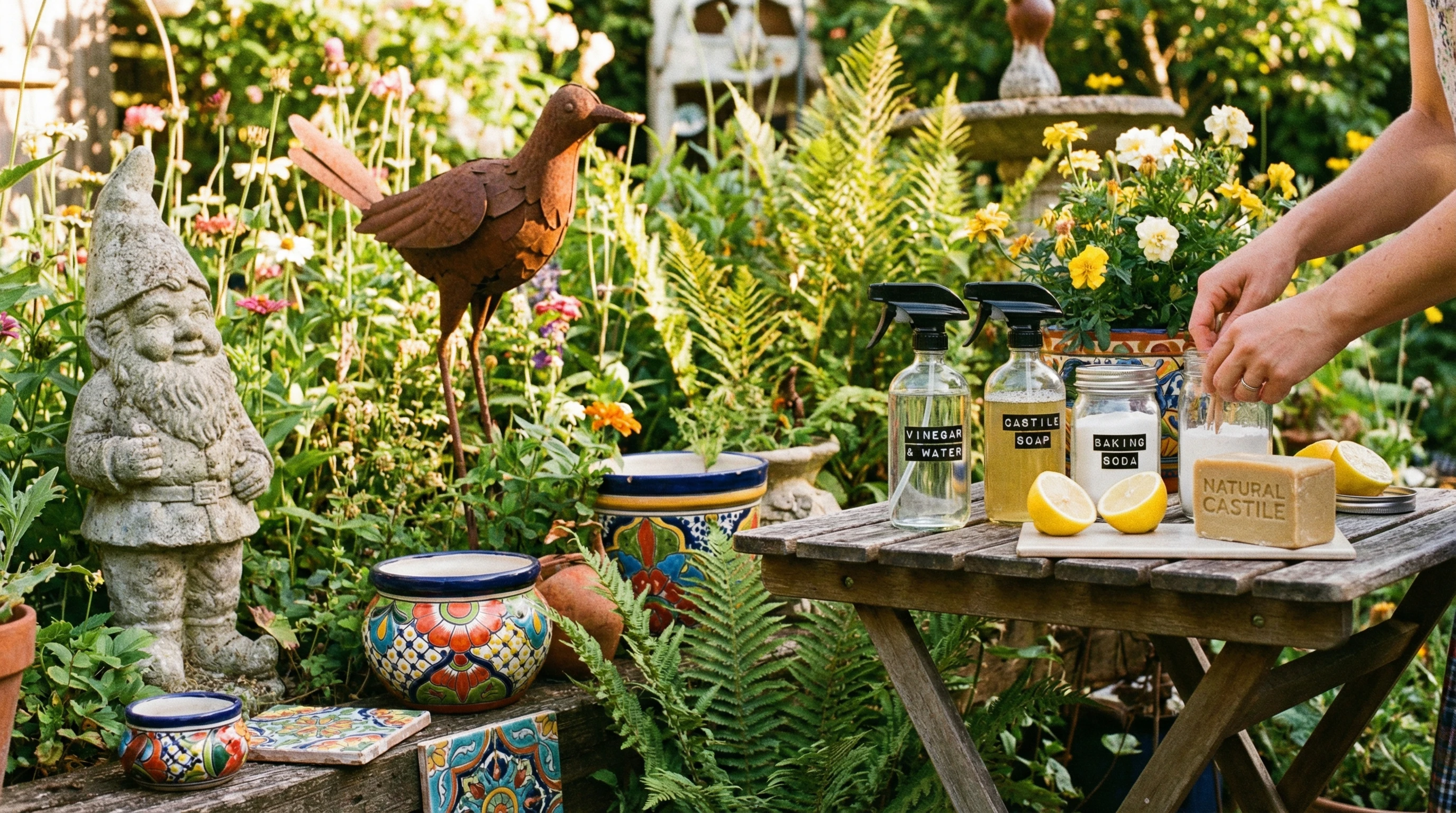
You probably already have pretty much everything you need in your pantry. Here are the eco-heroes I reach for most:
- White Vinegar: Great for dissolving mineral stains and mild moss on stone, concrete, and resin.
- Baking Soda: Adds mild scrubbing power and deodorizes without scratching.
- Lemon Juice: Decent for breaking up grime on lighter surfaces and leaving a fresh scent.
- Castile Soap: Plant based soap that handles dirt, pollen, and bird droppings gently.
- Olive Oil: Handy for buffing up metals like brass or bronze after cleaning.
Stick with warm water and one of the options above, and skip anything with artificial fragrances or bleach. A soft brush or old toothbrush comes in handy for corners and detailed carving.
For more stubborn dirt, you can add a pinch of salt to your baking soda paste, but be cautious using salt on porous or weathered stone as it may leave a white residue. Coconut oil, another natural product, is also popular for keeping wood or bamboo garden ornaments looking polished and vibrant.
3. Cleaning Solutions by Ornament Material
Stone and Concrete Ornaments
- For Regular Dirt and Dust: Mix water with a splash of castile soap. Use a soft brush, rinse well.
- For Moss and Mildew: Spray white vinegar diluted half-and-half with water, let it sit for 10 minutes, then scrub gently. Rinse thoroughly. Repeat for tough stains, but avoid overdoing it; too much vinegar can slightly etch softer stones over time.
Metal Ornaments (Iron, Bronze, Copper)
- For Rust: Sprinkle baking soda on a damp sponge and gently rub rusty spots. Rinse with water. A little lemon juice can help on stubborn areas, but always rinse metals right away.
- For Tarnish: Mix baking soda with water into a paste, apply it gently, and buff dry. Finish with a small amount of olive oil to keep it shiny and help prevent corrosion.
Ceramic, Resin, and Painted Ornaments
- Buildup and Dust: Fill a bucket with warm water and a few drops of castile soap, dip in a cloth or sponge, and gently wash the surface. Rinse thoroughly.
- For Mold or Algae: Mix equal parts vinegar and water. Use a soft brush to treat just the affected spots and rinse well to avoid drips on painted areas.
If you have wooden garden ornaments, keep them in great shape by using a diluted castile soap and water solution, followed by a gentle rubdown with coconut oil. This not only keeps the surface clean but also helps maintain moisture and color in wood, making your wooden figures last longer and look next-level cool.
4. Homemade Cleaning Recipes for Garden Ornaments
I’ve tested these quick recipes myself; they’re gentle, reliable, and super affordable.
Simple All Purpose Cleaner
- 2 cups warm water
- 2 tbsp white vinegar
- 1 tsp castile soap
Mix everything in a spray bottle, shake, and apply to almost any ornament (except unsealed marble and certain metals). Wipe off with a soft cloth or rinse with water.
Baking Soda Scrub for Stains
- 3 tbsp baking soda
- Enough water to make a spreadable paste
Spread this paste on tough stains or embedded grime, let sit for 10 minutes, and scrub gently. Rinse well after. This method works great on rough stone surfaces.
Lemon Brightener for Metal
- Juice of one lemon
- 2 tbsp baking soda
Mix into a paste, gently rub onto metal accents, and wipe off after five minutes. Always rinse and dry metal items to avoid water spots or rust forming again.
For some extra deodorizing power, you can add a couple of drops of essential oil such as lavender or tea tree to your cleaning mix—just be sure the oil you pick is safe for outdoor use and will not harm local wildlife.
5. Mold, Algae, and Lichen: Effective Green Treatments
Mold and algae look unsightly and can even make ornaments slippery. For these issues, vinegar and sunlight help a ton. Place cleaned items in direct sun after scrubbing to help stop regrowth; sunlight is safe and free.
- Spot Treatment Spray: Mix equal parts vinegar and water, spray on the affected area, let it sit for at least 20 minutes, then scrub and rinse well.
- If algae keeps coming back: Relocate your ornament to a sunnier spot if possible, and give it a gentle cleaning every couple of months.
If you need something stronger, hydrogen peroxide diluted 1:3 with water can target stubborn mold without toxic residue, but use it carefully and rinse thoroughly. For really stubborn lichen, a soft plastic scraper after soaking with water will help lift the growth without scratching the ornament.
6. Maintenance Tips for Long Lasting Shine
- Regular Rinsing: Hose off ornaments with plain water monthly, especially after rain or pollen heavy days.
- Seasonal Deep Clean: Do a gentle scrubbing every change of season to prevent buildup.
- Check for Damage: Inspect for cracks or chips before cleaning so water doesn’t get trapped where it could freeze and expand in the winter.
- Protect Painted Surfaces: Avoid abrasive scrubs and use a soft cloth. Consider adding a beeswax or plant based sealer if paint starts to flake.
Avoid using pressure washers on fragile or painted ornaments. These machines can strip away finishes and sometimes damage the ornament itself, so stick to gentle hand cleaning for the best results.
To further extend the life of your ornaments, store smaller, delicate pieces indoors during extreme weather or off seasons. Covering items with an old cloth or tarp can also help cut down on weathering if you have limited indoor space.
7. Safety Tips and What to Avoid
- Don’t Mix Vinegar and Bleach: Even though bleach isn’t ecofriendly, I often find garden guides recommending it. If you decide to use both for different tasks on separate days, store cleaners separately; mixing creates toxic gas.
- Avoid Synthetic Fragrances: Many “green” cleaners aren’t as natural as they look. Always check for plant based, biodegradable ingredients.
- Wear Gloves: Natural cleaners are still acids or bases, so if you have sensitive skin, slap on some gloves.
Always test any new cleaner on the bottom or underside of your ornament before doing the whole surface. This step helps you spot any unexpected reaction before it affects a visible area.
If you have young kids or pets running around your garden, store your cleaning supplies safely and rinse thoroughly after cleaning, just to avoid any chance that residue could be accidentally ingested or touched.
Final Thoughts
Ecofriendly cleaning isn’t hard or expensive. With just a few everyday supplies, you can keep your garden ornaments looking their best while caring for your plants, wildlife, and the soil. If you’ve tried out any of these ideas, I’d love to know which one worked best for you, or if you’ve got your own secret cleaning recipe; share it in the comments!
Keeping your outdoor decorations in shape with sustainable cleaners not only means a brighter, more eye-catching garden but also a healthier space for everyone who visits—from pollinators to people. Next time your ornaments start looking a little weathered, grab these green cleaning recipes and give your garden a fresh, ecofriendly lift.
I really enjoyed your article on eco‑friendly cleaning solutions for garden ornaments. It’s great how you explain not only why avoiding harsh chemicals matters for plants, pets, and soil health, but also how simple pantry staples like vinegar, baking soda, lemon juice, and castile soap can be used safely depending on the material of the ornament. I appreciate the clear breakdown by material type and the homemade recipes for different cleaning needs. After reading, I’m curious: have you found any particular eco‑friendly method that works best long‑term for preventing recurring moss or algae buildup on stone ornaments, especially in shaded areas where they tend to return quickly?
Hanna, thank you so much for such a thoughtful and encouraging comment—it truly made my day. I’m really glad you found the breakdown by material helpful and that the eco-friendly approach resonated with you. Protecting plants, pets, and soil while still keeping our garden pieces looking their best is exactly the balance I hope to help people find.
That’s a great question about moss and algae on stone, especially in shaded areas (those spots are always determined to grow something ????). Long-term, I’ve found the most effective eco-friendly approach is consistency rather than a single “magic” solution. A gentle scrub with a vinegar-and-water mix or baking soda paste works well for removal, but following up with good drainage, occasional sunlight exposure if possible, and a breathable stone sealer can really slow regrowth. Even a light seasonal rinse and brush before buildup gets heavy makes a big difference.
Thanks again for reading and for engaging so thoughtfully—questions like yours help shape future articles more than you know! ????
Great question—and honestly, shaded stone is moss and algae’s favorite hangout, so you’re not imagining things ????
The most effective eco-friendly long-term approach isn’t one single method, but a combo of prevention + light maintenance. Here’s what consistently works best without harming plants, pets, or soil:
???? Best Long-Term Eco-Friendly Methods
1. Breathable stone sealer (water-based)
This is the biggest game-changer. A natural, water-based stone sealer reduces moisture absorption without trapping water inside the stone. Less moisture = fewer spores taking hold. Reapply every 1–2 years.
2. Regular gentle cleaning (before buildup gets heavy)
A quick scrub every few months with:
White vinegar + water (1:1), orBaking soda paste for stubborn spots
Prevents spores from establishing deep roots. Light, frequent cleaning beats heavy scrubbing once a year.
3. Improve airflow and drainage
Even in shade, small changes help:
Raise ornaments slightly off soil using stone feet or gravelAvoid constant contact with damp mulch or dirt
This alone can dramatically slow regrowth.
4. Occasional sunlight exposure (when possible)
If the piece can be moved, even a few days of sun a couple times a year helps dry it out and discourages algae.
5. Soft brushing after rain
After rainfall, moss is easiest to remove. A soft brush keeps growth from settling in—no chemicals needed.
???? What to Avoid (even though they’re common)
Bleach or harsh cleaners (kills soil life and damages stone)Pressure washing (forces water into stone, making regrowth worse)
Bottom line
For shaded areas, a breathable stone sealer + light, regular maintenance is the most reliable eco-friendly solution long-term. You won’t eliminate moss forever in shade—but you can keep it slow, manageable, and gentle on the environment.
If you want, I can also suggest specific sealers or tailor this to limestone, concrete, or cast stone ????
With Gratitude
Much Love
Good Luck & Have Fun
Richard