
If you love antique garden ornaments as much as I do, you know they are more than just decorations. Every old urn, weathered birdbath, cast iron planter, or concrete gnome has a story tucked inside its cracks and faded patina. That’s part of what makes them so special.
Over the years, I’ve had the joy of rescuing and restoring all kinds of forgotten garden treasures. I’ve also learned that winter can be tough on these old friends if they’re left unprotected. A little care before the cold settles in can make all the difference.
I’d love to share a few of the simple tips I’ve learned along the way. They’re easy to do, and they’ll help keep your treasured ornaments safe through the snow, ice, and freezing temperatures, so they’re ready to bring beauty and character back to your garden when spring arrives.
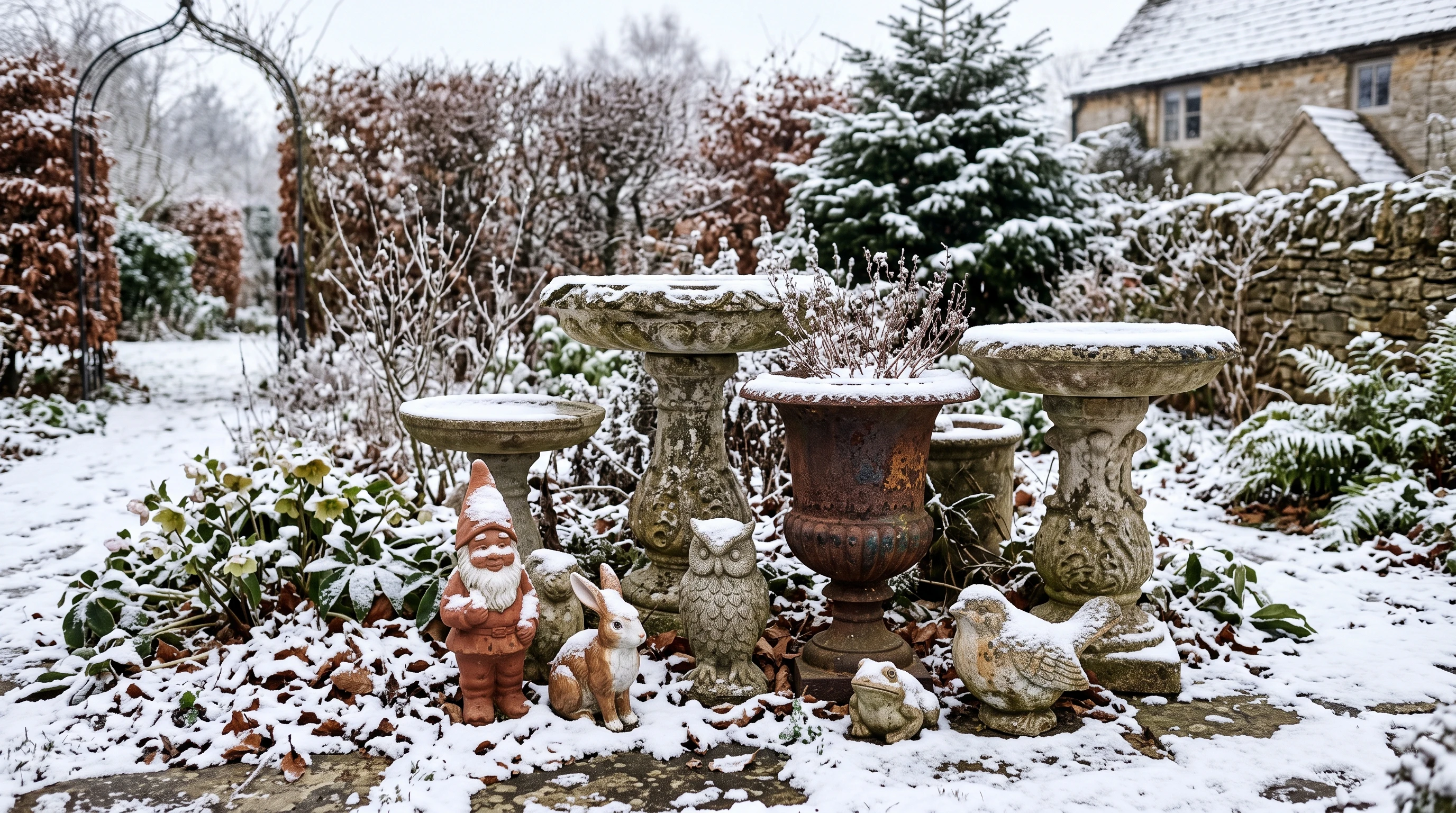
Why Winter Storage Matters for Antique Yard Ornaments
Antique yard ornaments, whether they’re made of concrete, cast iron, stone, ceramic, or wood, aren’t just decorative; they’re tiny snapshots of history. Over time, though, harsh winter weather can really do a number on them. Snow, ice, freezing rain, and wild temperature swings tend to speed up aging, cause cracks, and sometimes even break fragile or weathered pieces.
If you want your yard ornaments to survive the winter with minimal new damage, taking some time to put them away or prep them for the cold makes a huge difference. It’s not just about protecting their value; it’s also about honoring the work that went into these old pieces. Consider how these items might have stood outside for decades, facing every season, and think how a bit of effort can let you enjoy them even longer.
Assessing and Cleaning Yard Ornaments Before Storage
Before you tuck anything away, give each piece a close inspection. This isn’t just for show; it helps spot weak spots, chips, cracks, or areas where water might seep in and freeze. I like to use a soft brush to sweep off dirt and leaves. Mild soap and water work for most materials (avoid anything harsh, especially for painted finishes). For delicate materials like terracotta or soft stone, use as little water as possible and let them dry thoroughly so you don’t accidentally trap moisture inside.
- Repair minor chips: Patch them up with a paintable weatherproof filler if you’re handy. This blocks moisture and stops cracks from spreading.
- Remove rust on metal: Gently scrub iron or steel ornaments with a wire brush and treat rust patches with a rust converter before painting or sealing.
- Spot wobbly bases: Secure any unsteady stands with shims or reinforcement to prevent shifting or breaking during storage.
For painted ornaments, check for flaking or fading. These signs mean it’s time to patch up the paint or consider a fresh coat of sealant before putting everything away. Doing simple touch ups now can add years to your antiques’ lifespan.
Finding the Best Storage Spot
Choosing where to shelter your antique ornaments is a real game changer. A garage, garden shed, dry basement, or even an enclosed porch can work, as long as it stays dry and doesn’t dip below freezing. Humidity and condensation are real enemies of painted, metal, and even concrete ornaments. If you have limited space, you can place large pieces in the most sheltered corners of your garden, but add extra protection as described below.
- Elevate off the ground: Use wooden pallets, plastic risers, or a sturdy shelf to keep ornaments off damp floors and away from pooling water.
- Ventilation: Even while in storage, pieces need some air movement to prevent mold, so even just cracking a window on mild days helps.
- Protect from sunlight: Constant exposure to sunlight through garage windows can fade painted surfaces; drape an old sheet, breathable tarp, or large cardboard over sensitive pieces.
If your storage area is unheated, try monitoring for dampness with a simple humidity gauge, and run a small dehumidifier if necessary. Keeping everything dry is key to preserving old finishes.
Wrapping and Cushioning Delicate Pieces
For daintier or more fragile antiques, like thin bodied terracotta, intricate ceramic, or glass pieces, it’s worth the extra effort to wrap them up. I use blankets, old towels, or moving pads for large items and plain bubble wrap for smaller ones. Avoid plastic sheeting directly touching painted surfaces, since it can trap moisture and cause flaking.
- Bundle separately: Keep pieces from clinking together by giving each a separate wrap, with a soft buffer like foam or scrap fabric in between.
- Label bags and boxes: If you’re packing a bunch into bins, label each one. It saves you from a guessing game next spring.
Don’t forget to fill empty spaces around tightly wrapped ornaments in storage boxes with packing peanuts or crumpled newspaper, making sure nothing shifts around.
Sealing and Weatherproofing for Outdoor Storage
If you absolutely can’t move larger pieces, such as big fountains, urns too heavy to lift, or statues cemented in place, a little weatherproofing helps a lot.
- Water repellent sealers: Apply sealers designed for masonry, concrete, or stone. I use a clear silicone based spray or penetrating sealer every couple of years. For metal, a rust inhibiting primer and weatherproof paint do the trick.
- Adequate coverage: Cover outdoor pieces with waterproof, breathable fabric covers made for yard furniture, or use heavy canvas tarps staked down with bricks at the corners. The goal is to keep moisture off, but still let air circulate to avoid trapped condensation.
- Drain and dry: For anything with water features, be sure to drain any remaining water from bowls, planters, or fountains. Water left inside freezes, expands, and can split materials wide open.
It’s also smart to angle statues or urns slightly so rainwater drains away rather than pooling on horizontal surfaces. This easy adjustment can save delicate details from freeze damage.
Packing Tips for Heavy or Awkward Ornaments
Hauling around an old cast iron bench or oversized stone birdbath isn’t always fun, but I’ve found a few tricks that make things way easier:
- Use dollies or carts: Moving heavy ornaments with a dolly or garden cart saves your back and reduces the risk of dropping delicate pieces.
- Disassemble when possible: Break tall fountains, urns, or multipart pieces into sections, and wrap the pieces individually before storing.
Try to plan ahead and ask a friend for help—two sets of hands make a big difference when shifting weighty objects. Taking things slow instead of rushing usually prevents accidents and keeps your collection safe.
Preventing Rodent and Insect Damage
While you’re thinking about protection, don’t forget critters. Mice, insects, and even stray outdoor animals love to nest in yard ornaments, especially hollow ones or items with deep crevices.
- Clean thoroughly: Tip out any nesting material or debris before wrapping and storing.
- Check throughout winter: Glance in on your stored ornaments every now and then to catch unwelcome guests early.
If you suspect pests, use some cotton balls dabbed with peppermint oil near storage bins or in the corners of the shed, as the scent can discourage rodents. Just make sure whatever you use is safe for your ornaments and your pets.
Extra Maintenance Before Unpacking in Spring
Come spring, don’t rush to put everything back in the yard without another lookover. Even stored pieces might need a bit of TLC after a season in the shed.
- Inspect for new cracks or peeling paint.
- Touch up finishes: A quick coat of sealant or paint keeps things looking fresh and ready for another season in the sun.
- Give everything a light clean: Dust or hose off lingering cobwebs and dirt before display.
Also, make sure any covers or wraps you used over winter are dry and clean before storing them for next year.
Real-World Examples and Common Pitfalls
I’ve heard plenty of stories from other collectors about winter woes. One person lost a beloved concrete bunny to frost after a particularly wet fall, while another had a birdbath bowl snap right in half when water inside expanded into ice. I’ve also learned that ornament bases are often the first part to break down. A little foam pad or wood plank underneath makes a massive difference.
Watching out for hidden trouble spots each year really helps avoid these heartbreaks. I like to check local gardening forums or museums for advice on specialized pieces, such as cast lead statues or rare ceramics, since custom care might be needed. Some experienced collectors even keep a maintenance log to record repairs and treatments, which makes it much easier to track down issues and see patterns over time.
Frequently Asked Questions
How early should I start preparing yard ornaments for winter?
Answer: Start before your first frost if you can. Giving things time to dry thoroughly before storage cuts down on trapped moisture and damage.
Can I leave antique ornaments outside if I don’t have storage space?
Answer: You can, but take extra steps. Elevate, wrap, and cover as described above. Try to bring in any smaller or especially rare pieces if possible.
What sealers are safe for antiques?
Answer: Look for breathable sealers labeled for historic stone, terracotta, or masonry. Museum supply stores online sometimes have good options, especially for delicate finishes.
How can I tell if an ornament is too fragile to move?
Answer: Tap gently on solid surfaces; if it sounds hollow or you notice crumbling, it’s best to leave it in place and carefully weatherproof rather than risk a break during moving.
Enjoying Your Antique Yard Ornaments Year After Year
A bit of care before winter goes a long way for antique yard ornaments. By checking for damage, storing or wrapping carefully, sealing surfaces, and keeping pests away, your collection stays in good shape for many seasons to come. If you’re curious about specific materials or techniques, sites such as the National Park Service’s preservation briefs or local extension offices offer super helpful guides you might want to bookmark. Every new season brings another chance to show off your favorite pieces, and a little prep work means they’ll be ready to greet you and your visitors when the snow finally melts. Your antique ornaments deserve that extra bit of attention; after all, they’ve likely stood the test of time for decades and can continue to brighten your garden for years with just a little help from you.